

BMW Thermostat: symptoms of failure and change without overheating
BMW Thermostat: Symptoms of Failure and Change Without Overheating
There are breakdowns that come with fireworks (smoke, jerks, warning lights like a Christmas tree) and others that sneak in silently, little by little, until one day you wonder why your BMW no longer "runs smoothly." The BMW thermostat belongs to the second category: it can fail without making a fuss, but when it does, it changes the character of the car. Suddenly, it takes an eternity to reach temperature, fuel consumption rises, the heating doesn't perform as before, the DPF in diesel becomes more finicky... or, in the worst-case scenario, it gets stuck closed and puts you in serious overheating trouble.
I have seen it many times: owners chasing ghosts (lambda sensor, EGR, fan, water pump) when the culprit was a lazy thermostat. And the best part is that, with a sensible diagnosis, it can be detected without guessing. In this technical sheet "competition mode," we will put the BMW thermostat in the spotlight: real symptoms, normal values, how to check it with OBD or manually, which engines are more prone, and how to change it wisely so that the cooling system works as Munich intended. If you like your car to run smoothly, this is for you.
1) What the BMW thermostat does and why it fails
The BMW thermostat is, literally, the thermal conductor of the orchestra. Its job is simple in theory: to keep the engine within its ideal temperature range. When cold, it closes to allow the engine to warm up quickly. Once the threshold is reached, it opens the passage to the radiator to dissipate heat. If the thermostat makes a mistake, the entire balance is disrupted.
The "sweet spot" temperature in BMW
Many modern BMWs operate hotter than people expect. It's not uncommon to see service temperatures around 88–105 ºC depending on the engine, load, thermal map, and whether it has an electronically controlled thermostat. That "extra" heat helps with efficiency and emissions. The problem arises when the BMW thermostat stays too open: the engine runs cold, and the car enters a sort of "permanent winter mode."
Why a thermostat fails (without romanticizing it)
- Spring wear and fatigue of the thermostatic element over the years.
- Deposits from old coolant, strange mixtures, or tap water (yes, it still happens).
- Deformed housing or worn gaskets: small leaks that lead to big problems.
- Internal heater failures in electronic thermostats (depending on the engine): the thermal map loses control.
And here's an uncomfortable truth: when the BMW thermostat fails "open," the car usually keeps running... and that's why it's ignored. But the cost comes later, in consumption, soot, more frequent regenerations, and wear.
2) Symptoms of a faulty BMW thermostat (open/closed)
To be clear, there are two scenarios: a stuck open thermostat (the most common) and a stuck closed thermostat (the most dangerous). In both cases, the BMW thermostat is signaling "that's it" and gives you quite coherent signals.
When the thermostat stays open (engine too cold)
- Takes a long time to reach temperature: on the highway, it may not even reach its normal range.
- Poor heating at idle or on short trips.
- Higher consumption and a more "lazy" response.
- More frequent or failed DPF regenerations in diesel (temperature rules).
- Typical OBD codes: “Engine coolant temperature below thermostat regulating temperature” (depending on ECU/engine).
A detail I often notice on the road: with an open thermostat, the car runs "well," but it doesn't run s smoothly. In a healthy BMW, the engine stabilizes quickly, and management settles down. If you spend 15–20 minutes and it still feels cold, the BMW thermostat is at the top of the suspect list.
When the thermostat stays closed (overheating)
- Rapid temperature rise in the city or when demanding power.
- Fan running at full speed abnormally.
- Excessive pressure in hoses and expansion tank.
- Erratic heating: sometimes the circuit doesn't flow as it should.
- Real risk of warping the head or damaging the gasket if you insist.
If your BMW overheats, there's no epic here: stop, let it cool down, and diagnose. A BMW thermostat closed is one of those failures that don't forgive the "last lap home."
Quick table: symptoms vs probable cause
| Symptom | Most probable | What to check |
|---|---|---|
| Constant low temperature | Open thermostat | Real temperature OBD and upper hose |
| Overheats in a few minutes | Closed thermostat / water pump | Circulation, bleeding, fan |
| High consumption and "picky" DPF | Open thermostat | Stable temp on the highway |
| Leak in thermostat housing | Worn gasket/housing | Stains, sweet smell, low level |
3) Practical diagnosis: how to check the BMW thermostat
Diagnosing a BMW thermostat doesn't require guessing. It requires method. Here are several ways, from the simplest to the more "pro," so you don't change parts blindly.
Test 1: reading real temperature with OBD
If you have an OBD reader and a decent app, check the coolant temperature parameter (and if you can, also oil temperature). Do it like this:
- Start cold and drive normally for 10–15 minutes.
- In the city, it should rise progressively without strange "plateaus."
- On the highway, after stabilizing, the temperature should not drop sharply unless going downhill without load.
If you see that the engine stays, for example, at 70–75 ºC forever (depending on the model), the BMW thermostat is usually stuck open.
Test 2: touch the hoses (yes, like before)
Carefully (and without burning yourself), touch the upper radiator hose during warming:
- In a healthy system, that hose should be cold or warm until the thermostat opens.
- If it heats up too soon, the thermostat may be open from the start.
It's not a "scientific" test, but combined with OBD, it's quite conclusive for a BMW thermostat.
Test 3: heating and thermal stability
In diesel, a useful trick: turn the heating up high and see if the engine loses temperature on the road. A tired thermostat allows the radiator to "steal" too much, and the system doesn't maintain its point. If your BMW always runs cool, the ECU enriches/adjusts, and the whole system doesn't work in its optimal zone.
What if the problem isn't the thermostat?
Good question. Before condemning the BMW thermostat, check:
- Coolant level and possible leaks.
- Bleeding: air pockets give crazy readings and irregular heating.
- Water pump (mechanical or electric, depending on the engine).
- Temperature sensor (less common, but it exists).
To have it handy if you're going to leave the circuit fine: here are spare parts that usually come into play when you touch the cooling system.
4) BMW engines where the thermostat causes more trouble
The BMW thermostat can fail in any engine, of course. But there are families where I've seen it repeat as a pattern. Not because BMW "does it wrong," but because the thermal design is more demanding, there are more components, and, above all, efficiency is sought by precisely controlling temperatures.
Modern diesels: when running cold becomes expensive
In many BMW diesels (with DPF, EGR, and emission strategies), a thermostat that keeps the engine cold puts you in a vicious circle: more soot, more frequent regenerations, and an engine that seems to never be "in its place." If you make short trips, a faulty BMW thermostat is doubly noticeable.
Gasoline with "smart" thermal management
In modern gasoline engines, the thermal system is used to heat quickly and reduce friction, but also to avoid detonation and manage performance. A BMW thermostat that doesn't regulate well can cause anything from strange consumption to fans acting where they shouldn't.
My experience with the "star symptom"
The symptom that repeats most in the real world: temperature dropping on the highway. In the city, it seems to work halfway, but on the road, with constant airflow, the open thermostat reveals itself. If your BMW drops temperature while maintaining 120 km/h and rises again when stopping at a toll, the suspicion about the BMW thermostat is very serious.
5) Changing the BMW thermostat: "no drama" procedure
Let's get to the important part: changing a BMW thermostat. The exact "how" varies by engine (location, access, whether it's integrated into the housing with a sensor, if there's an EGR thermostat in diesel, etc.). But the logic and good practices are common.
Checklist of tools and consumables
- Set of sockets/Torx and E-Torx (very BMW).
- Container to collect coolant.
- Gloves and goggles (antifreeze doesn't forgive in eyes).
- Correct coolant and distilled water if a mixture applies.
- New gaskets if the thermostat/housing doesn't include them.
Step by step (generic but realistic)
- Cold engine. If it's hot, wait. Don't negotiate this.
- Depressurize: slowly open the expansion tank cap.
- Drain coolant (radiator or lower hose depending on the model). Keep it if it's new, but ideally, renew it.
- Access: remove covers, intake ducts, or anything that obstructs. Take photos: you'll thank yourself later.
- Remove the thermostat: carefully disconnect connectors/sensors and loosen cross bolts if it's a housing.
- Clean surfaces: without aggressive sanding. Remove gasket remnants and dirt.
- Install the new one: correct torque (without overtightening; many housings are delicate).
- Refill and bleed: this is where hours are gained or lost.
The bleeding: where it is decided if the repair is perfect
In BMW, bleeding can be more "special" depending on the generation. Some have procedures with contact, heating at maximum, and electric pump cycling. Others are more traditional with a bleed screw. My advice: follow the specific procedure for your model, but keep these rules clear:
- Heating at maximum to open the cabin circuit.
- Refill slowly, without rushing, allowing air to escape.
- Check that the heating heats properly and that there is no constant bubbling.
- After the first trip, check the level when cold.
Change only the thermostat or do a "combo"?
It depends. If your BMW has mileage and you're already opening the circuit, it often pays to check elements that tend to fail due to age:
- Water pump if there are symptoms or if it's electric and old.
- Expansion tank and cap if there are signs of fatigue or cracks.
- Hoses softened or with micro-cracks.
It's not "change for the sake of changing": it's to avoid having to drain the circuit again in three months due to a silly leak.
6) Typical (and costly) mistakes when repairing the thermostat
I have seen BMW thermostat repairs that end up needing a tow due to avoidable mistakes. Here are the classics, so you don't become that statistic.
Error 1: mixing coolants "because it's all antifreeze"
Mixing technologies (OAT/HOAT, etc.) can generate sludge, gels, or loss of corrosion protection. In a BMW, that translates to radiators and housings suffering. If you don't know what's inside, it's better to drain and refill with the correct one.
Error 2: not bleeding properly
An air pocket can cause:
- Heating that doesn't heat.
- Temperature spikes.
- Erratic readings that make you think the BMW thermostat is "bad."
Error 3: reusing gaskets or tightening "by eye"
In many thermostat housings, the plastic and gaskets work at thermal limits. Reusing an old gasket or overtightening is a recipe for leaks. And a small leak today is an overheating tomorrow.
Error 4: ignoring the diagnosis and shooting at everything
If the engine runs cold, don't start with sensors, fans, or radiators without data. The BMW thermostat has very clear patterns. And if the engine overheats, don't take it for granted either: confirm circulation, pump, radiator, and possible obstructions.
NEWLY ARRIVED! FOR YOUR BMW
-

Radio Screen for BMW 3 Series F30 F31 F34 Rear view camera as a gift!
Regular price From €880,00 EURRegular priceUnit price by€690,09 EUROffer price From €880,00 EURBMW10Starting at €792,00 EUR -

///M BMW compact card holder wallet with billfold
Regular price €41,80 EURRegular priceUnit price by -

///M BMW compact card holder wallet with billfold
Regular price €41,80 EURRegular priceUnit price by -

Thermal glass ///M 500 ml for hot and cold drinks
Regular price €38,50 EURRegular priceUnit price by -
 Offer
OfferBMW M Small Zip Wallet – Compact Purse/Organizer (4 Colors)
Regular price €16,50 EURRegular priceUnit price by€20,90 EUROffer price €16,50 EURBMW10€14,85 EUROffer -
 Offer
OfferBMW Leather Wallet / Keychain with Zipper (Black, Blue and White) – Premium Style
Regular price €22,00 EURRegular priceUnit price by€31,90 EUROffer price €22,00 EURBMW10€19,80 EUROffer -
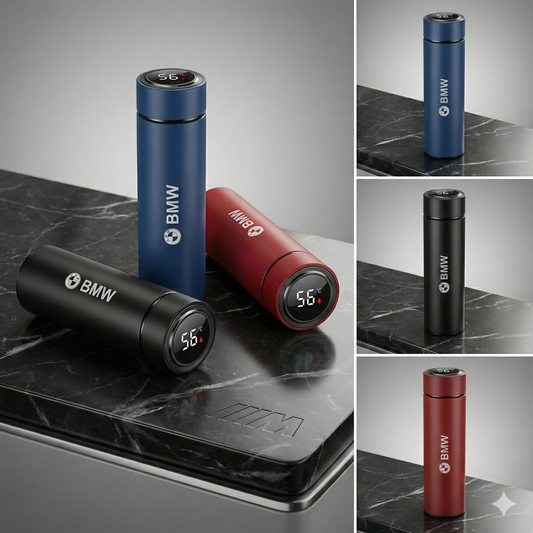
Smart BMW thermos with temperature indicator
Regular price €42,90 EURRegular priceUnit price by€38,50 EUROffer price €42,90 EURBMW10€38,61 EUR -
 Offer
OfferBlack automatic BMW umbrella with BMW logo | Premium windproof accessory
Regular price €30,80 EURRegular priceUnit price by€42,90 EUROffer price €30,80 EURBMW10€27,72 EUROffer -
 Offer
OfferBadges / Logos / Emblems ///M for BMW seats and backrest – Set of 2 pieces 14 x 60 mm
Regular price €20,79 EURRegular priceUnit price by€27,50 EUROffer price €20,79 EURBMW10€18,71 EUROffer -

Carbon effect BMW logo emblem – Bonnet/trunk badge 82/74 mm · Steering wheel 45 mm · Hubcaps 68/56 mm
Regular price From €16,50 EURRegular priceUnit price by -

White BMW logo emblem – Hood/trunk badge 82/74 mm · Steering wheel 45 mm · Hubcaps 68/56 mm
Regular price From €16,50 EURRegular priceUnit price by -
 Offer
OfferApple / Android mobile phone holder - original BMW M with 15W fast wireless charger – Magnetic hands-free for car
Regular price €108,90 EURRegular priceUnit price by€165,00 EUROffer price €108,90 EURBMW10€98,01 EUROffer


- Selecting an option refreshes the entire page.
- Opens in a new window.
Other customers also added...


